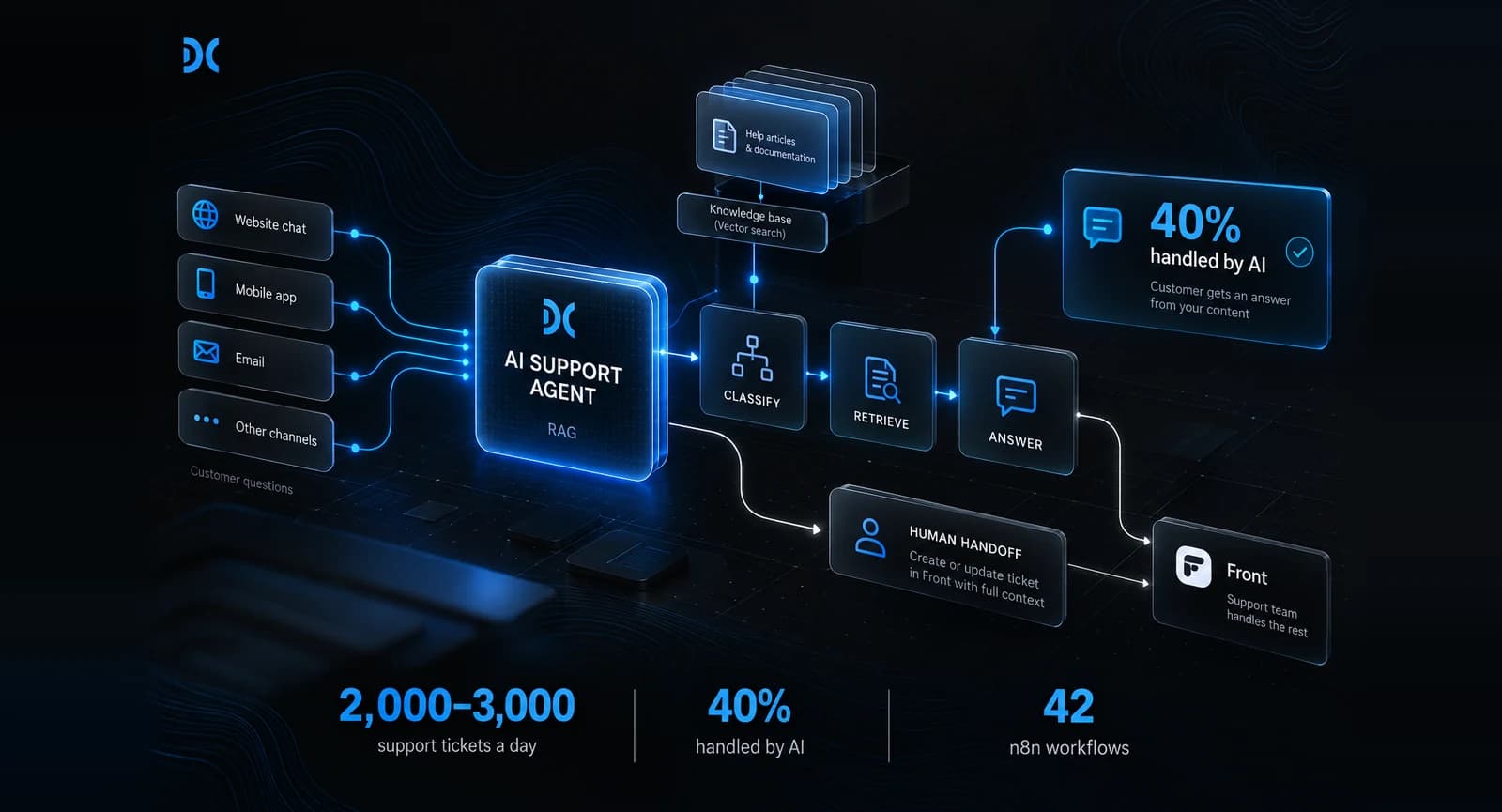
AI agents · Integration · Automation

AI that works inside the systems you already run.

Most AI pilots die somewhere between the demo and the ERP. We build agents, integrations and automation that plug into the software your business actually runs on — with scoped permissions, a reviewed write queue, full audit logs, and 100% source code ownership.

Free · 30 minutes · no prep required · you leave with a written next step

Example trace · Devs Core access layer
  • agent.read → inventory.stock(branch: "chattogram")412 units in stock · 340 ms
  • agent.write → erp.purchase_order.create(qty: 500)held for approval · queued to ops lead
  • agent.read → crm.account("Aziz Group").open_invoices3 invoices · 2 overdue · 180 ms
  • agent.write → helpdesk.ticket.close(id: 8842)approved by rifat@ · written · logged
Companies we have built for
32+Companies we have built for
Users on the platforms we built
100,000+Users on the platforms we built
Our systems running in production
3+ yearsOur systems running in production
AI products we built, shipped and run
2AI products we built, shipped and run

The animation shows the Devs Core access layer: systems such as an ERP, CRM, inventory and helpdesk on one side, agents and people on the other, and every request routed through a single gate. Read requests pass straight through; write requests stop at the gate and wait for a person to approve them.

Some of the companies we have built for

  • IAB
  • Gardyn
  • ReCyrcle
  • Aziz Group
  • Base Papers
  • RH Corp
  • NUTMEG
  • Retina
  • Getinbox
  • EhsanBD
  • Paradigm
  • Oggrow

The problem

Most AI pilots never reach the systems that actually run the business.

It is rarely the model that fails. It is everything around it — the integration nobody scoped, the write nobody would approve, the deployment nobody owns.

Over 40% of agentic AI projects will be cancelled by the end of 2027.”

Gartner, June 2025

  1. 01

    It never got access to anything real

    The demo ran on a sample spreadsheet. Production means your ERP, your CRM, your ten years of inconsistent product codes — and nobody scoped the integration before the budget was approved.

  2. 02

    Nobody would let it write

    Reading is easy to approve. The moment an agent needs to create a purchase order or close a ticket, it meets a finance lead who has no way to see what it did or undo it, and the project quietly stops at read-only.

  3. 03

    It worked, and no one could maintain it

    A prompt chain in a notebook, one contractor who understood it, no tests and no logs. Six months later the model changed, the output drifted, and there was no way to tell.

How it works

The access layer: how a governed AI agent reaches your systems

An agent does not get your credentials. It gets a permissioned layer in front of them — one that knows which operations exist, which the agent may call, and which require a person to say yes first.

  1. 01

    Connect the systems you already run

    We build a connector per system — ERP, CRM, inventory, helpdesk, the internal database nobody documented. Each one exposes a named set of operations, and nothing beyond them.

  2. 02

    Scope what the agent may touch

    Permissions are set per system and per operation, not per model. An agent that can read stock levels cannot silently gain the ability to change a price.

  3. 03

    Reads pass. Writes wait for a person

    Queries run at machine speed. Anything that changes a system of record goes to a review queue with the proposed change shown in full, and a named person approves or rejects it.

  4. 04

    Every call is logged and attributable

    Who asked, what ran, what came back, who approved it. When someone asks what the AI did last Tuesday, there is an answer rather than a shrug.

Reads passWrites wait for a humanEvery call logged
How the integration works

Capabilities

AI agent development, integration and automation

Six ways we build with AI, and four foundations underneath them. Every one is a fixed scope with a published starting price.

  • Read more

    AI Agent Development

    Agents that take real actions in your systems — reading live data, drafting work, and writing back only what a person has approved.

    • A working agent against your real data, not a demo dataset
    • Scoped tool permissions, per system and per operation
    • An approval queue for every write, with a named reviewer
    From $6,500 · 4–6 weeks
  • Read more

    AI Integration Services

    Ours alone

    The access layer between the software you already run and any AI model — so an agent can reach your ERP, CRM or helpdesk without being handed the keys.

    • A permissioned access layer over your existing systems
    • Connectors for the systems you name, with a documented contract
    • An audit log of every call, attributable to a person or an agent
    From $8,000 · 5–8 weeks
  • Read more

    Process Automation

    Replace the manual steps between two systems — the re-keying, the copy-paste, the spreadsheet that reconciles what neither system knows.

    • The process mapped as it actually runs, not as the manual describes it
    • An automated path with an exception queue for the cases that need judgement
    • A before-and-after on the hours the step was costing
    From $4,500 · 3–5 weeks
  • Read more

    Computer Vision Development

    Detection, inspection and counting from camera feeds, running on the floor rather than in a research notebook.

    • A model trained on your footage and your failure cases
    • Deployment to on-site hardware or a camera stream
    • A measured accuracy and false-positive rate you can hold us to
    From $9,000 · 6–10 weeks
  • Read more

    AI Readiness Audit

    Ours alone

    Two weeks that end in a written plan: which processes are worth automating, what each would cost, and what has to be fixed first.

    • A ranked shortlist of processes with an hours-and-cost estimate on each
    • A verdict on whether your systems can be integrated, tested against a real API
    • A build plan you can take to any vendor, including not us
    From $2,400 · 2 weeks
  • Read more

    AI Build Rescue

    Ours alone

    For a pilot that impressed everyone in the demo and then stalled before production. We take it over, find what it is missing, and get it live or tell you to stop.

    • A written diagnosis of why it did not ship
    • A go / no-go with the cost of each path
    • If go: the production work, on a fixed scope
    From $3,500 · 2–3 weeks to diagnosis

Foundations

The software the agents run on top of. Still ours, still shipping.

All capabilities

Selected work

Systems that went live and stayed live

Thirty-two projects since founding. Three of them, with the numbers we can show.

All client work
  • Cadenza — a verified market brief with every claim cited to its source

    AI research

    Autonomous multi-agent research with a human checkpoint

    Five agents that plan a research question, search and read the web in parallel, synthesise what they found, then stop and wait for a person to approve the direction — and verify every claim against its cited source before the brief is written. Ours, and the reason we know what a production agent costs.

    Planner, researchers, analyst, critic
    5 agentsPlanner, researchers, analyst, critic
    Human approval before it writes
    1 checkpointHuman approval before it writes
    Verified against its source
    Every claimVerified against its source

    Read the case study

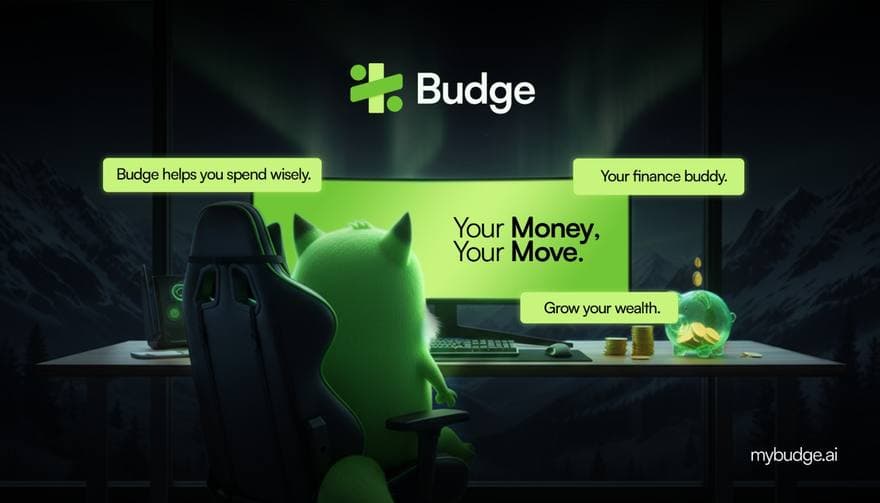
  • Budge — a personal finance agent that updates the ledger from a chat message

    FinTech

    A personal finance agent on a model we host ourselves

    Say what you spent in a sentence and the ledger updates. Budge parses the entry, shows it for confirmation, then writes to a real double-entry ledger — across web, iOS and Android, in over 150 currencies, on a customised DeepSeek model running on our own infrastructure.

    Currencies supported
    150+Currencies supported
    Web, iOS and Android
    3 platformsWeb, iOS and Android
    Customised DeepSeek model
    Self-hostedCustomised DeepSeek model

    Read the case study

  • IAB member management platform interface

    Membership body

    A member platform for 10,000+ members, live in four months

    A membership body running operations through the office inbox. We built the portal that let members serve themselves — registration, renewals, role-based admin, chapter sites and the migration of every existing record — and shipped it in four months. Nine engagements across three years since.

    Members served
    10,000+Members served
    To live, including migration
    4 monthsTo live, including migration
    Engagements over three years
    9Engagements over three years

    Read the case study

  • Gardyn hydroponics e-commerce storefront

    E-commerce

    Hydroponics commerce for a US east-coast brand

    Storefront, catalogue, checkout flow and fulfilment for a hydroponics company selling into the US — designed mobile-first and built to survive a seasonal traffic curve rather than an average day.

    Live storefront
    US east coastLive storefront
    Built to hold the curve
    Seasonal peaksBuilt to hold the curve

    Read the case study

  • ReCyrcle recycling app screens

    Sustainability

    Gamified recycling with eco-coins and IoT collection sync

    A recycling app with an eco-coin wallet, real-time sync to collection hardware and a transaction ledger behind it — turning a civic duty into something with a balance that goes up. One Flutter codebase across iOS and Android.

    One Flutter codebase
    iOS + AndroidOne Flutter codebase
    To collection points
    IoT syncTo collection points
    Eco-coin ledger
    WalletEco-coin ledger

    Read the case study

Our products

AI systems we built, shipped and run ourselves

We do not only build AI for other people. Running our own agents in production is how we learned what they actually cost, where they break, and why the access layer needs to exist.

  • Budge personal finance AI agent
    Devs Core product

    Budge

    A personal finance agent on a customised model

    A finance AI agent built on a customised DeepSeek model and shipped to web, iOS and Android, with 100+ users. Building and running it is how we learned what a production agent actually costs — and it is why the access layer looks the way it does.

    • Customised DeepSeek model, self-hosted
    • Shipped on web, iOS and Android
    • 100+ users
  • Market Research Agent — a verified market brief with sources cited
    Devs Core product

    Market Research Agent

    An autonomous multi-agent research system

    Several agents that plan, search, read and cross-check their way to a written market brief, coordinating without a human in the loop between steps. We run it on our own market research.

    • Multi-agent planning and delegation
    • Source cross-checking before a claim is written
    • Used on our own market work

Who this is for

Find the sentence you have said out loud this month

People rarely search for an AI agent. They search for the thing that is going wrong. Pick whichever of these sounds like your week.

Where we work

Delivering into 5 countries, from one engineering team

A US company with its engineering team in Dhaka. Every arc on this globe starts in the same room — which is why the work is consistent and the accountability has one address.

Why Devs Core

Six things you can hold us to

Not values. Commitments — each one specific enough that you would know if we broke it.

  • You own 100% of the source code

    Every engagement hands over the full repository, documented. No licence fees, no runtime we hold, no reason you cannot take it to another team.

  • A US company, engineered from Dhaka

    Registered in Florida, with a ten-person delivery team in Bangladesh. The same structure hundreds of US firms use, said plainly rather than hidden.

  • Writes go through a human by default

    Unattended write-back into live financial records is not our starting position. It is something you switch on later, per operation, once the log has earned it.

  • Fixed scope, fixed price, written change process

    Scope is agreed in writing before work starts and changes go through a process you agreed to. Nobody discovers the budget moved in a status call.

  • Two or three projects at a time

    A ten-person team that runs two or three engagements in parallel. You are not a queue position behind forty other accounts.

  • We will tell you when not to build

    If packaged software already covers the problem, the audit says so and we withdraw. That answer has cost us work and earned us the call when the package later failed.

Packages

Three ways in, with the price on the door

Fixed scope, fixed price, agreed in writing before work starts. Most engagements begin with the audit, because an estimate built on a tested integration is worth more than one built on a guess.

  • AI Readiness Audit

    You suspect there is a case but cannot size it yet

    $2,400fixed · 2 weeks

    We map the processes, test whether your systems can actually be integrated, and hand you a written build plan. Including the answer that you should not build.

    • Process mapping across the team that feels the pain
    • A real integration test against your API or a sandbox
    • A ranked shortlist with hours and cost against each process
    • A written build plan you can take to any vendor
    • A 60-minute walkthrough of the findings
    Start with the audit
  • Agent Pilot

    Most chosen

    You know the process. You need it proven on live data

    $6,500from · 4–6 weeks

    One process, end to end, against your real systems — with scoped permissions, an approval queue on every write, and a measured before-and-after.

    • One agent, one process, running on live data
    • Connectors for the systems that process touches
    • Scoped permissions and a reviewed write queue
    • Audit logging from the first day, not retrofitted
    • A measured result you can take to a board
    • Full source code, documented, in your repository
    Book a discovery call
  • Access Layer

    The pilot worked and you want the foundation built properly

    $8,000from · 5–8 weeks

    The permissioned layer between all of your systems and any model — so the second, third and fourth agent take weeks rather than months.

    • Connectors across the systems you name
    • Per-system, per-operation permission model
    • Central approval queue with named reviewers
    • Full audit trail, exportable
    • Documentation your team can extend from
    • Handover and a maintenance path that does not need us
    Talk through the scope

Larger builds are quoted from the audit. See everything, including maintenance.

How we work

Four steps, and you can stop after any of them

Nobody should commit to an AI programme on the strength of a demo. Each step here exists to make the next one a smaller decision than it would otherwise be.

  1. 01

    Discovery call

    30 minutes, free

    You describe the process that is costing you. We say whether it is something we would take on, and what the realistic shape is. You leave with a written next step either way.

  2. 02

    AI Readiness Audit

    2 weeks, fixed price

    We test the integration against a real API rather than assuming it. You get a ranked shortlist of processes, an estimate against each, and a build plan you could hand to any vendor.

  3. 03

    Pilot on one process

    4–6 weeks

    One process, end to end, against live data with the write queue on. Narrow enough to prove or disprove the case before anyone commits to a programme.

  4. 04

    Extend, or stop

    Your call

    The pilot either paid for itself or it did not, and the logs say which. If it did, the next process is faster because the access layer is already there.

Technology

What we build with, and what we build against

We pick the boring option unless there is a reason not to. The last group is the one that usually matters — those are the systems the agent has to reach.

AI and agents
  • OpenAI
  • Anthropic Claude
  • Llama
  • DeepSeek
  • LangGraph
  • Model Context Protocol
Vision
  • PyTorch
  • YOLO
  • OpenCV
  • ONNX Runtime
Backend
  • Django
  • FastAPI
  • Node.js
  • PostgreSQL
  • Redis
  • Celery
Frontend and mobile
  • React
  • Next.js
  • TypeScript
  • Tailwind CSS
  • Flutter
  • Swift
  • Kotlin
Systems we integrate with
  • SAP Business One
  • Microsoft Dynamics
  • AutoCount
  • SQL Account
  • Odoo
  • Zoho
  • Salesforce
  • Shopify
Run and observe
  • Docker
  • AWS
  • Vercel
  • GitHub Actions
  • OpenTelemetry
  • Sentry

Insights

What we learned shipping AI into systems that were never designed for it

All insights
  • AI adoptionIn progress

    Why AI pilots die somewhere between the demo and the ERP

    The demo is the easy half. Everything that kills an AI project happens in the gap between a convincing prototype and a system of record that nobody will let it touch.

    8 min read

  • AI governanceIn progress

    The reviewed write queue: how to let an agent change real data

    Read access is easy to approve. Write access is where every AI project meets its finance lead. Here is the pattern that gets past that conversation.

    6 min read

  • AI governanceIn progress

    Scoping what an AI agent is allowed to do

    Permissions belong to operations, not to models. A practical model for deciding what an agent may call, and what it must ask for.

    7 min read

Questions

What people ask before the first call

If yours is not here, ask it directly — the answer will be as specific as these are.

Ask us something else

What is a governed AI agent?

A governed AI agent is an AI agent whose access to business systems is explicitly scoped and auditable. It can only call the operations it has been granted, on the systems it has been connected to; read operations run freely, write operations are queued for a named person to approve; and every call is logged with who asked, what ran and what was returned. The governance is in the access layer around the agent, not in the model.

Why do most AI pilots fail to reach production?

Three reasons dominate. The pilot ran on sample data and nobody scoped the integration to the real system. The agent was never permitted to write, so it stalled at read-only and never produced measurable value. Or it shipped without tests, logs or an owner, and drifted unnoticed when the model changed. Gartner predicts over 40% of agentic AI projects will be cancelled by the end of 2027.

How do you connect an AI agent to an ERP safely?

Through an access layer rather than direct credentials. The ERP is wrapped in a connector that exposes a named, limited set of operations. The agent is granted specific operations rather than a login. Reads execute immediately; writes are held in a review queue, shown in full to a named approver, and only then committed. Every call is logged. In a first engagement with an unfamiliar ERP, we prove the integration in a sandbox before any build is quoted.

What is a reviewed write queue?

A reviewed write queue holds every change an AI agent wants to make to a system of record until a person approves it. The proposed change is shown in full — the record, the field, the old value and the new one. The reviewer approves or rejects, and the decision is logged against their name. It is what makes it reasonable to point an agent at live financial data.

What does AI governance actually mean in practice?

In practice it is three mechanisms, not a policy document. Scoped permissions: the agent holds a grant to named operations rather than a user login, so it cannot do something nobody authorised. A reviewed write queue: anything that changes a record waits for a named person, and a category only becomes unattended once its agreement rate has earned it. An audit log: every call recorded with who asked, what ran, what came back and who approved it. Governance you can demonstrate to an auditor is built into the access layer, not written about in a charter.

How do we start adopting AI without disrupting the business?

Start with one process, read-only, beside the people who do it today. The agent proposes, a person decides, and you compare the two for a few weeks — nothing in the system of record changes until the agreement rate justifies it. That sequence means the worst case is a project that did not pay for itself, rather than an incident. Most adoption goes wrong by starting with the most visible process rather than the most repetitive one.

How much does an AI agent project cost?

Devs Core publishes fixed prices. An AI Readiness Audit starts at $2,400 for two weeks. An agent pilot on a single process starts at $6,500 and runs four to six weeks. A full access layer across several systems starts at $8,000. Custom operational software starts at $14,000. Every price is a starting point for a scope agreed in writing before work begins.

How long does it take to build an AI agent?

A pilot against one process, running on live data with an approval queue, takes four to six weeks. The two-week readiness audit before it is what makes that estimate reliable, because the integration is tested rather than assumed. A full access layer across several systems takes five to eight weeks.

What does it cost to keep an AI agent running?

Devs Core charges from $1,200 a month to maintain a custom system or agent, with the fixed figure set after a scoping call. Three costs are specific to agents and are easy to miss when budgeting: per-run model cost, which moves with usage rather than with your headcount; sampled accuracy review, which is how a category keeps earning the right to run unattended; and model deprecations, because a provider retiring a model is a planned migration if somebody is watching for it and an outage if nobody is.

Can an AI agent work with a legacy system that has no API?

Usually, though the route matters. In order of preference: a direct read-only database connection, a supported export or file drop, the vendor’s reporting or integration module, or — last — driving the interface the way a person does, which is the most brittle and the first thing to break on an upgrade. Writes are the harder half, and some legacy systems should only ever be read from. The readiness audit tests this against your actual system in week one, so a build is never quoted on the assumption that it will work.

Who owns the code Devs Core writes?

The client owns 100% of the source code for every engagement, handed over documented and in the client’s own repository. There are no licence fees and no runtime component that Devs Core retains. Another team can take the work on without our involvement.

What happens if the AI gets something wrong?

Read errors surface in the output where a person can see them. Write errors are caught before they happen, because a write is a proposal until someone approves it. If something does get through, the audit log identifies the call, the input, the output and the approver, so it can be traced and reversed rather than investigated by guesswork.

Where is Devs Core based?

Devs Core is based in two places. The business team is in the United States — Devs Core LLC, registered in Florida, which is who you contract and invoice with. The engineering team is in Dhaka, Bangladesh, and is who builds and runs your system, working in your hours. The company was founded in 2022 and serves clients in the United States, Bangladesh, Germany, Australia and Canada.

Do we have to replace our existing software?

No. The entire approach assumes you keep the systems you already run. Devs Core builds the layer that lets AI reach them. If packaged software already covers the problem, the readiness audit will say so and recommend against a custom build.

Tell us which process is costing you.

Thirty minutes, no preparation, no deck. You describe what keeps going wrong and we tell you whether AI is the answer — including when it is not.

Prefer email? contact@devs-core.com