
By industry
AI agents and automation for fintech and financial services
Financial operations are mostly exception handling: a statement that does not parse, a payment that does not match, a document that needs reading, a customer question that needs a real balance. We build agents that do the reading and matching, and we make every write reviewable — because in this sector an unexplained automated action is worse than a slow one.
Two weeks to a written build plan · no obligation to build with us
- A finance agent we built, shipped and run
- BudgeA finance agent we built, shipped and run
- Currencies handled in that product
- 150+Currencies handled in that product
- Models can run on your own infrastructure
- Self-hostedModels can run on your own infrastructure
- Logged with its inputs and its rule version
- Every decisionLogged with its inputs and its rule version
Where the time goes
If two of these are true, there is something here
Written the way the people doing the work describe it, not the way a process document does.
Reconciliation is a person comparing two screens
The bank feed on one side, the ledger on the other, and a human deciding whether two lines are the same payment. It is the most automatable work in the building and the last thing anyone trusts to automate.
Every document is read by hand
Bank statements, KYC documents, payslips, invoices, loan files. Somebody opens each one, finds four fields, and types them somewhere else.
Support cannot answer without a person
Balance, transaction history, statement requests and limit questions all sit behind a login the support tool cannot reach, so every one becomes a human lookup.
The exception queue never empties
Unmatched payments, failed direct debits, returned transfers. Each one needs judgement, and the backlog grows faster than the team that clears it.
What we connect to
The systems you are already running
Financial services run on a core system that rarely changes and a ring of tools that change constantly. We build in the ring and read from the core.
- Core and ledgers
- Core banking APIs
- Custom ledgers
- PostgreSQL / Oracle
- Xero
- QuickBooks
- NetSuite
- Payments and data
- Stripe
- Plaid
- Open banking APIs
- bKash
- Nagad
- SWIFT / ISO 20022 files
- Risk, identity and service
- KYC / AML vendors
- Sanctions list feeds
- Zendesk
- Intercom
- Salesforce Financial Services Cloud
What we build here
Five things worth building for fintech & financial services
Each one names the systems it touches, because an integration that is not named is an integration nobody has thought about yet.
- 01
Statement and document extraction
Bank statements, payslips and KYC documents read into structured fields with a confidence score each, the original kept alongside. Low-confidence fields are never quietly accepted — they are the ones a person is shown.
- Touches
- Document store · ledger · onboarding system
- What changes
- Document reading stops being a headcount line.
- 02
Transaction matching and reconciliation
Feed lines matched to ledger entries on amount, date window, reference and counterparty, with fuzzy matching where references are human-entered. Confident matches post; the rest arrive as a ranked shortlist rather than an empty search box.
- Touches
- Bank feeds · ledger · accounting system
- What changes
- The daily reconciliation becomes a review of the hard cases only.
- 03
Transaction categorisation
Spending and revenue classified against your own chart of accounts, learning your corrections rather than a generic taxonomy. This is the part of Budge we have run in production, and the corrections loop is what makes it hold up.
- Touches
- Transaction feed · chart of accounts · reporting
- What changes
- Reports are usable without a monthly clean-up pass.
- 04
A support agent with real account access
Balances, transaction history, statement copies and limit questions answered after the customer is authenticated, through a read-only credential. Disputes, refunds and limit changes are drafted for a person to approve.
- Touches
- Core system (read-only) · helpdesk · identity provider
- What changes
- Routine account questions close in the channel the customer asked in.
- 05
Exception triage
Unmatched payments, failed collections and returned transfers grouped by likely cause, with the evidence and a proposed action attached. The queue arrives sorted by what the team can actually clear.
- Touches
- Payment provider APIs · ledger · case tooling
- What changes
- The backlog is worked in order of resolvability instead of arrival.
How it is put together
How a transaction gets matched and posted
Everything here is built so that a regulator, an auditor or a customer can be given a straight answer about why a particular entry was made.
- 01
Ingest
Feeds, files and documents landed in an immutable raw store first. Nothing is interpreted before it is stored, so a reprocessing run can always be repeated against the original input.
- 02
Normalise
Amounts, currencies, dates and counterparty names brought to a canonical form. Currency handling is explicit — Budge deals in over 150 currencies, and every rounding rule there is a decision we had to make deliberately.
- 03
Match and classify
Deterministic matching first, model-assisted matching only for what deterministic rules could not settle. A model is a tie-breaker with evidence attached, never the first pass.
- 04
Gate
Value thresholds, confidence floors, counterparty risk and your own policy decide what may post unattended. Everything else queues with the evidence and a proposed action.
- 05
Post and evidence
Scoped write credentials, idempotency on the source transaction id, and a full record of inputs, rule version, model version and approver. The evidence trail is the deliverable, not a by-product.
Your data
What we will and will not do with it
Stated plainly, and without claiming a certification we do not hold. If a requirement here is harder than what is written, say so on the call and we will tell you whether it is buildable.
We do not hold card numbers or credentials
Nothing we build stores or transmits a PAN, and we never ask for customer banking credentials. We work through your provider APIs and tokens, which keeps your PCI scope where it already is.
No financial advice, and no unattended money movement
We build systems that read, match, classify and propose. Moving money, changing a limit or closing a dispute is an action a person takes. That is a design rule here, not a phase-one caution.
We hold no financial certifications, and will say so
We are a software company, not a licensed or certified financial provider. We build to the controls your compliance team specifies and give them the audit trail to inspect — but if a procurement form needs a certification, we are not the party that holds it.
Proof
We built a finance agent and then had to run it
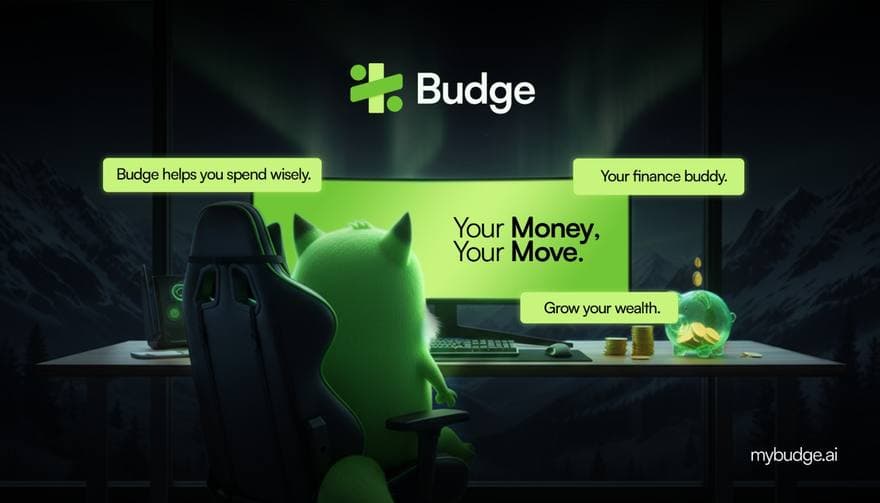
Budge is our own personal finance agent — chat in, parsed entry, confirmation, ledger update — running on a customised model we host ourselves, across web, iOS and Android and over 150 currencies. Categorisation drift, correction loops, currency rounding and the cost of a model call at volume are things we learned by operating it, not by reading about them.
- Currencies supported
- 150+Currencies supported
- Web, iOS and Android
- 3 platformsWeb, iOS and Android
- Customised DeepSeek model
- Self-hostedCustomised DeepSeek model
Technology
What this gets built with
We pick the boring option unless there is a reason not to — the framework is the part most likely to be abandoned before your system is.
- Extraction and matching
- Document AI
- OCR
- Deterministic matchers
- Fuzzy matching
- Confidence scoring
- Agents and models
- LangGraph
- OpenAI
- Anthropic
- Self-hosted open weights
- Structured output
- Integration
- Plaid
- Stripe
- Open banking APIs
- ISO 20022 / SWIFT files
- FastAPI
- Controls
- Immutable raw store
- Audit log
- Idempotency keys
- Scoped credentials
- RBAC
How the engagement runs
Five phases, each with something you can hold
Every phase ends in a named deliverable. You can stop after any of them and keep what has been built.
- 01Week 1–2
Sit with the work
We watch the process as it is actually done, not as the process document says. The output is a map of every step, which system it touches and how long it takes.
DeliverableProcess map and a shortlist of what is worth automating - 02Week 2–3
Design the access layer
Which systems get read, which get written to, what scope each credential carries, and which decisions stop for a person. Agreed in writing before anything is built.
DeliverableArchitecture and permission model - 03Week 3–8
Build against your real data
Built in your sandbox against real records, not a demo dataset. The write path goes through a review queue from the first day, so nothing lands in a live system unseen.
DeliverableRunning system in staging, with the review queue - 04Week 8–10
Run it beside the humans
It runs in parallel with the people doing the job. We compare the two outputs, fix what differs, and only then start letting the routine path through unattended.
DeliverableAgreement rate report and a go-live threshold - 05Ongoing
Hand over and watch
Source code in your repository, deployment in your accounts, cost and failure dashboards you can read without us. Support if you want it, not because you are locked in.
DeliverableRepository, runbook and monitoring
Why Devs Core
Three reasons that are checkable
We run two of our own products
Cadenza and Budge are ours. What an agent costs per run, where it fails and which decisions need a person came from operating them, not from a vendor deck.
The write path is reviewed by default
Anything that changes a record in a system of record goes through a queue a person can see. You choose what graduates to unattended, and when.
You own the code
Source in your repository, infrastructure in your accounts, model keys in your name. There is no runtime of ours you have to keep paying for.
Questions
FinTech & Financial Services — the questions we get asked
Can we run this without sending customer data to OpenAI or Anthropic?
Yes.
Extraction, classification and matching all work on open-weights models hosted on your own infrastructure. Budge itself runs on a model we customised and host, so this is a path we have taken rather than one we are describing.
How do you prove to an auditor why an entry was posted?
Every posted entry carries its source document, the extracted fields with their confidence scores, the rule version that allowed it, the model version if one was involved, and the approver where there was one.
The reconstruction is a query, not an investigation.
Will an agent ever move money?
Not in anything we build.
Payment initiation, limit changes and dispute resolution are human actions. An agent can prepare them completely so the human action is one click, which captures most of the time saving without the risk.
What accuracy should we expect on statement extraction?
High on machine-generated PDFs, lower on scans and photographs.
The number that matters is not raw accuracy but how many documents still need a human touch after the correction loop has run for a few weeks — we measure that during the parallel run and report it.
Are you SOC 2 or ISO 27001 certified?
No, and we will not imply otherwise.
We build to the controls you specify — scoped credentials, data residency, audit logging, self-hosted models — and your compliance team can inspect all of it. If a certified vendor is a hard requirement for your procurement, that is a legitimate reason not to use us.
We are a small fintech. Where should we start?
Almost always with reconciliation or document extraction, because both have clear right answers, an obvious current cost, and a safe failure mode — an unmatched item just stays unmatched.
Customer-facing agents are better as a second project, once the read path is trusted.
Related
What fintech & financial services buys most often
- AI Agent Development
AI Agent Development
Agents that take real actions in your systems — reading live data, drafting work, and writing back only what a person has approved.
From $6,500 - Process Automation
Process Automation
Replace the manual steps between two systems — the re-keying, the copy-paste, the spreadsheet that reconciles what neither system knows.
From $4,500 - AI Integration Services
AI Integration Services
The access layer between the software you already run and any AI model — so an agent can reach your ERP, CRM or helpdesk without being handed the keys.
From $8,000 - AI Readiness Audit
AI Readiness Audit
Two weeks that end in a written plan: which processes are worth automating, what each would cost, and what has to be fixed first.
From $2,400
Tell us which process is costing you.
Thirty minutes, no preparation, no deck. You describe what keeps going wrong and we tell you whether AI is the answer — including when it is not.
Prefer email? contact@devs-core.com