
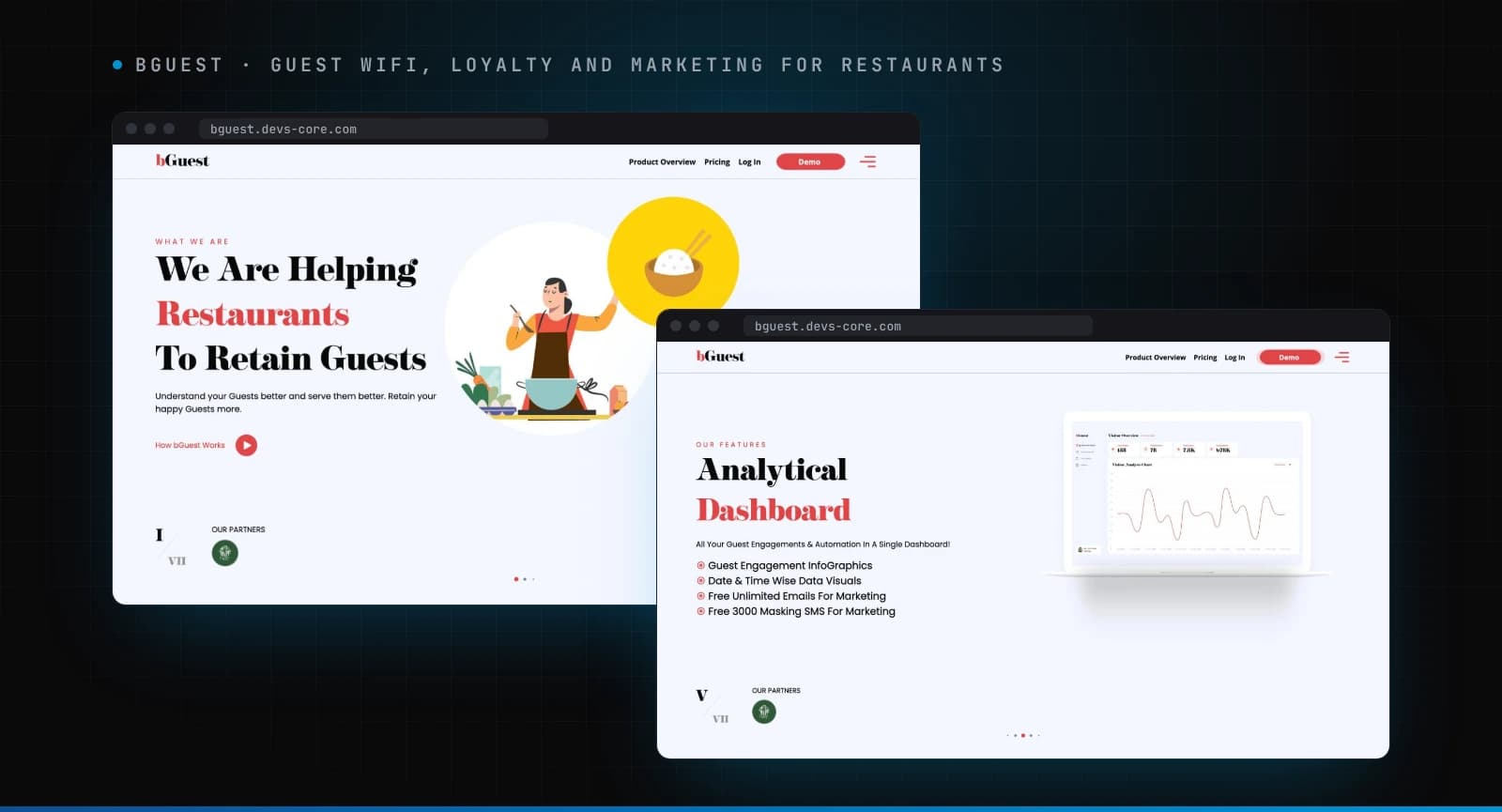
Most restaurants don't know who their guests are. People come, eat, pay and leave, and the restaurant has no name, no number and no idea whether they'll come back. bGuest is our own product that fixes that through something every restaurant already has: free WiFi. We wrote custom firmware for the restaurant's router, so guests sign in to the WiFi with their name, email and phone number, and the router records when they arrive, when they leave and how often they come back. A web app turns that into guest profiles per branch, email and SMS marketing, and an alert for the manager when a regular walks in, with a recommendation of what to offer them.
We built bGuest in 2023, and five restaurant brands, each with one to three branches, ran it. Each branch collected 100+ guest profiles a month, from none before.
At a glance
- What it is: a guest data and loyalty platform for restaurants, built and run by Devs Core
- What we built: router firmware for guest WiFi sign-in and visit tracking, the mobile sign-in page guests see, the web app for restaurant owners and managers, a recommendation engine, and the website
- Who used it: five restaurant brands, each with one to three branches
- Replaced: nothing; the restaurants had no guest data at all
- Timeline: 4 months, in 2023
- Team: a UI designer, a firmware developer, a React developer, a Django developer and a project manager
- Stack: custom router firmware, React, Django
The challenge: restaurants didn't know their own guests
- No guest data. Restaurants didn't have guests' names, numbers or visit history, so every guest was a stranger, even the regulars.
- Loyalty programmes leaked. Without knowing who came back, restaurants were losing their loyalty customers and couldn't tell who had stopped coming.
- Marketing had no one to reach. With no list of guests, there was no one to send an offer to.
A restaurant's best marketing list is the people who already ate there. Most restaurants never write it down.
What we built: free WiFi that remembers your guests
- Router firmware, in the restaurant: guests sign in to the free WiFi with their name, email and phone number, and the router records arrival, departure and every return visit
- WiFi sign-in page, for guests: a mobile page that opens when they connect, one sign-in and they're online
- Web app, for owners and managers: guests per branch, visit history, who ordered what, analytics, and email and SMS marketing
- Recommendation engine, for managers: when a guest comes back, the manager gets an alert, with a suggestion of what to offer them
- Website, for restaurants considering bGuest
The router collects the data, the web app turns it into guests a restaurant can recognise, and the marketing tools bring them back.
For guests: free WiFi in one sign-in
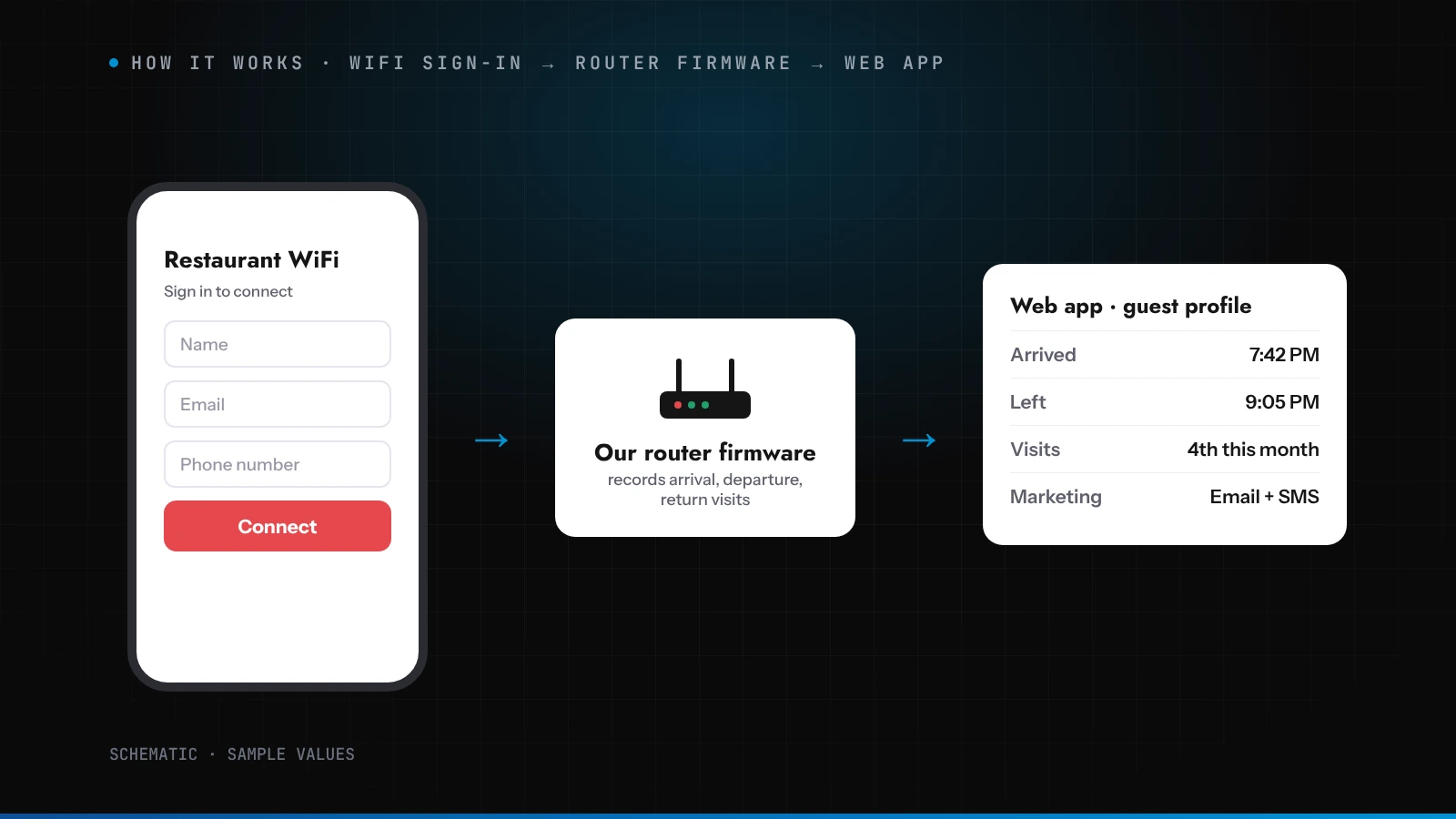
- Connect and sign in once with a name, email and phone number.
- Online straight away, on the restaurant's own WiFi.
- Recognised next time. The restaurant knows it's a returning guest.
For owners: every guest, every branch, in one dashboard
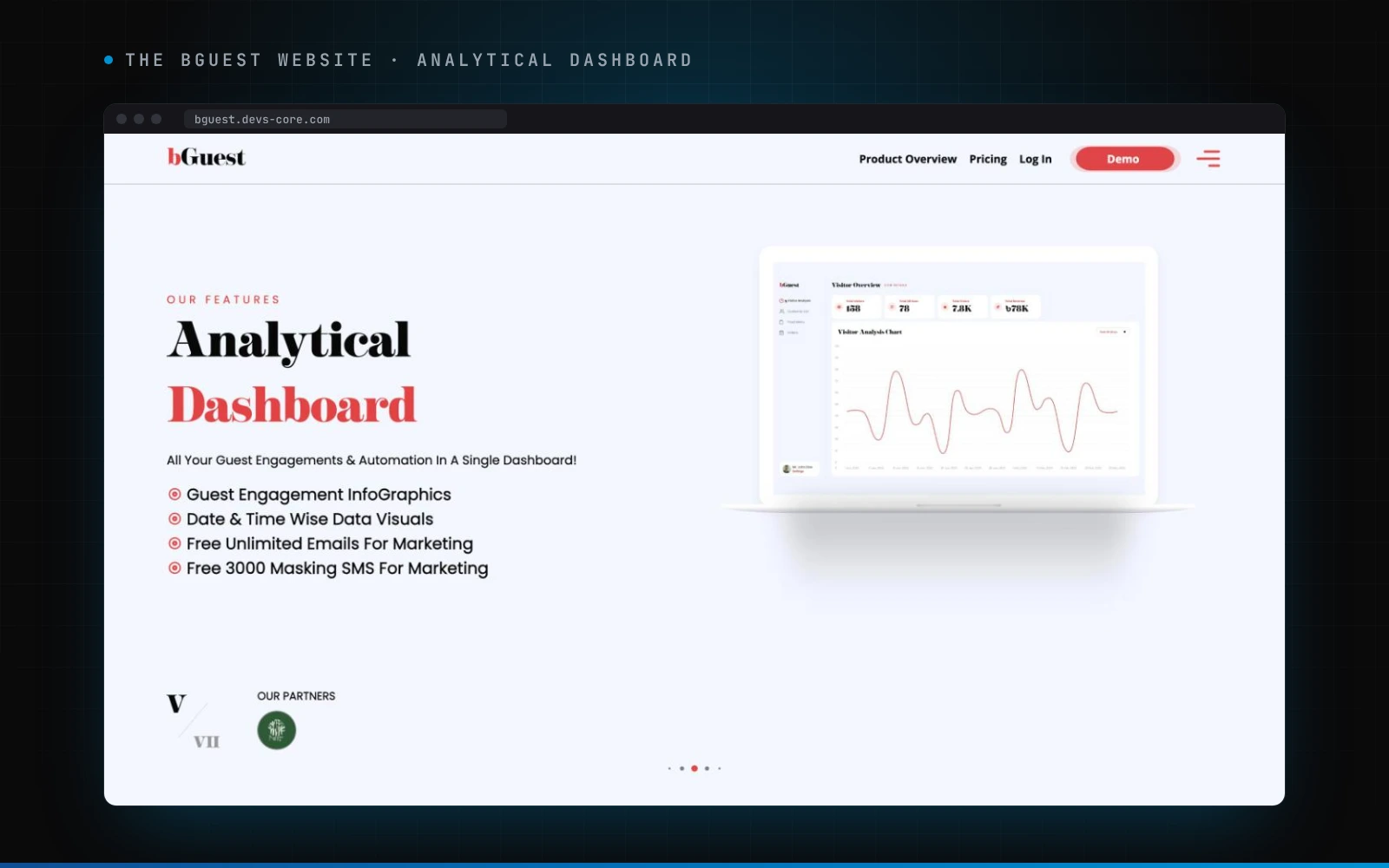
- Guest profiles per branch: who came, when they arrived and left, and how many times they've been back.
- Who ordered what: staff record orders by table, so each guest's history includes what they ordered.
- Analytics: guest engagement over time, by date and by hour.
- Marketing built in: email and SMS campaigns to the restaurant's own guests, to bring them back.
For managers: know when a regular walks in
- An alert when a guest returns. The manager knows a regular is at the table.
- A suggestion of what to offer, from the recommendation engine, based on the guest's visits and orders.
How we built it
Firmware for routers that kept changing
Collecting the data meant running our own firmware on the restaurant's router. Making it work on the latest routers took a lot of trial and error: each new model behaved differently. And it wasn't a download: we went to each restaurant in person and installed the firmware on their routers by hand.
The hard part: showing restaurants why data matters
The bigger challenge wasn't technical. Restaurants had never had guest data, so they didn't see why they needed it. We spent as much time explaining the value of knowing their guests (who returns, who has stopped coming, who to send an offer to) as we did building the product.
What was next
The roadmap included POS integration, so orders flow in without staff typing them, and ordering from a menu on the guest's phone. Both were planned next steps; in the version restaurants ran, staff entered orders by table.
The results
| Before bGuest | With bGuest |
|---|---|
| No guest names, numbers or visit history | 100+ guest profiles a month per branch |
| Loyalty customers lost without notice | Every arrival, departure and return visit recorded |
| No one to send marketing to | Email and SMS campaigns to the restaurant's own guests |
| Regulars treated like strangers | An alert and a suggested offer when a regular returns |
Across five restaurant brands, each branch went from no guest data to 100+ guest profiles a month, by bGuest's own records, and used the marketing tools to retarget those guests.
What we'd do again
- Use what the restaurant already has. Free WiFi was the cheapest way to collect guest data, with nothing new for guests to download.
- Budget for hardware in the field. Router firmware means site visits, testing on real routers and installing by hand.
- Sell the why before the what. Restaurants had to understand the value of data before any feature mattered.
- Close the loop. Data only pays off when it turns into an offer that brings a guest back.
Frequently asked questions
How can a restaurant collect customer data through WiFi?
By asking guests to sign in to the free WiFi with their details. With bGuest, custom router firmware shows a sign-in page when a guest connects, and records their arrival, departure and return visits, so the restaurant builds a guest list without any extra app.
What is a restaurant guest loyalty platform?
It's software that keeps track of who your guests are and how often they come back, then helps you bring them back. bGuest combines WiFi sign-in, visit history, email and SMS marketing, and a recommendation of what to offer a returning guest.
How much guest data can a restaurant collect?
In bGuest's case, each branch collected more than 100 guest profiles a month, starting from none. The numbers depend on footfall and how many guests use the WiFi.
How long does it take to build a restaurant WiFi marketing system?
bGuest took four months with a team of five: a UI designer, a firmware developer, a React developer, a Django developer and a project manager. The firmware took the most trial and error, because it had to work on different router models.
Want a product built around how your customers actually behave? Book a call, or see how we approach software development.